Local SEO for Multiple Locations: A Complete Optimization Guide


Why Multi-Location Businesses Struggle With Local Visibility
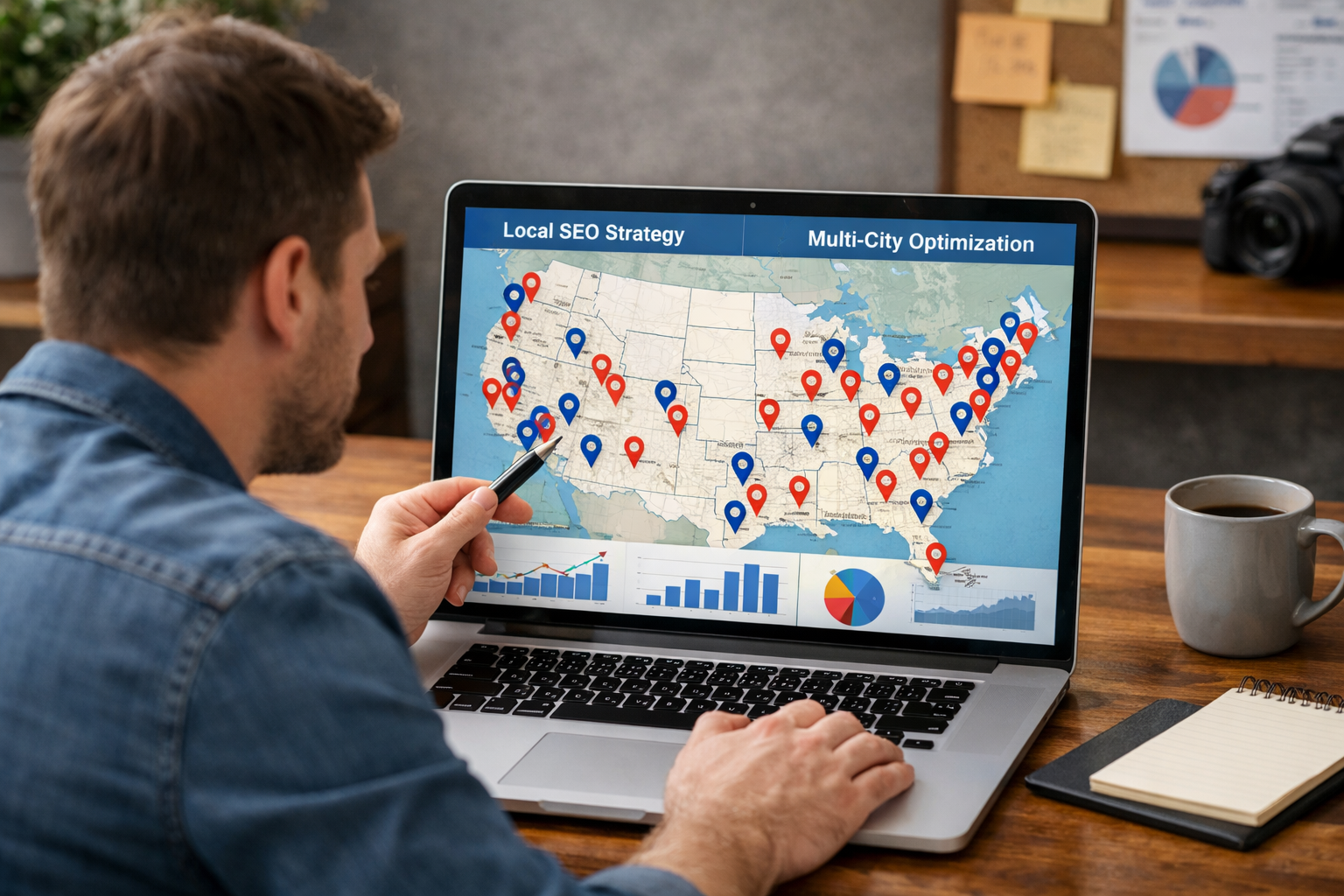
Managing online visibility for a single location can already be challenging. Managing five, ten, or even fifty locations across different cities introduces a new level of complexity. Without a clear strategy, many businesses attempting local SEO for multiple locations end up competing against themselves in search results or failing to rank at all.
A common mistake is duplicating the same page and simply replacing the city name. Search engines like Google are much more sophisticated than that. They evaluate signals such as relevance, proximity, consistency, and authority for each individual location.
When businesses fail to structure their websites properly, several issues often occur:
- Duplicate content that confuses search engines
- Diluted ranking authority across location pages
- Reduced visibility in the local map pack
- Inconsistent NAP (Name, Address, Phone) information
- Internal keyword competition between pages
However, when implemented correctly, local SEO for multiple locations allows businesses to dominate regional markets simultaneously. Companies can capture high-intent searches in multiple cities and build strong visibility across geographic markets.
This guide explains how to build and scale a multi location local seo strategy that improves rankings and avoids common optimization pitfalls.
What Local SEO for Multiple Locations Really Means
Local SEO for multiple locations is the process of optimizing a website so that each physical business location can rank independently in its specific geographic market.
Instead of relying on one generic service page, a multi-location SEO strategy creates location-specific signals that help search engines understand:
- Where each branch operates
- Which services are available at each location
- How each office serves the local community
- Why the location is relevant to nearby searchers
Search behavior is highly localized. When someone searches for a service in a specific city, Google prioritizes results that demonstrate strong local relevance.
Effective seo for multiple locations helps businesses:
- Rank in Google’s local map pack
- Increase location-based website traffic
- Generate regional leads or foot traffic
- Build authority across multiple geographic markets
- Avoid internal competition between pages
Rather than centralizing authority on a single page, Google prefers distinct location signals for each branch.
Step-by-Step Multi-Location SEO Strategy
A successful seo strategy for multiple locations requires a structured framework. The following steps provide a clear process for scaling local visibility across multiple markets.
Step 1: Create Dedicated Location Pages
Every business location should have its own dedicated landing page. This page serves as the primary ranking asset for that specific geographic area.
A properly optimized location page should include:
- Unique location-specific content
- Complete NAP details (Name, Address, Phone)
- Embedded Google Maps location
- Localized keywords for the city or region
- Customer testimonials from that location
- Service descriptions tailored to local audiences
Clear URL structures help search engines understand geographic targeting.
Example structure:
/locations/dallas-digital-marketing-agency/
/locations/miami-seo-services/
This structure improves crawl clarity and supports location-based SEO.
Internal linking also strengthens authority. Businesses can highlight project examples through pages like Our Work to reinforce credibility and demonstrate experience.
Step 2: Optimize Google Business Profiles for Each Location
For effective multi location seo, every physical location must have its own optimized Google Business Profile.
Each listing should include:
- Accurate NAP information
- Updated business hours
- High-quality images
- Detailed service descriptions
- Location-based keywords
Encouraging customers to leave reviews for each specific location is extremely important. Reviews are one of the strongest ranking signals for local search visibility.
Consistent engagement with reviews also improves trust signals.
Step 3: Maintain NAP Consistency Across Directories
NAP consistency plays a major role in multi location seo services. Search engines cross-reference your business information across multiple directories to verify accuracy.
If your address, phone number, or business name appears differently across platforms, search engines may reduce trust in your listing.
Businesses should audit listings across platforms such as:
- Google Business Profiles
- Yelp
- Bing Places
- Local industry directories
Maintaining consistent data strengthens credibility and supports a reliable local seo strategy for multiple locations.
Step 4: Implement Structured Data for Each Location
Structured data helps search engines understand the details of your business locations.
Using LocalBusiness schema markup allows you to clearly define:
- Business address
- Phone number
- Opening hours
- Business type
- Geographic coordinates
Implementing structured data strengthens search engine positioning SEO for local results and can improve eligibility for rich search features.
Step 5: Build Localized Backlinks
Backlinks remain one of the most powerful ranking factors for SEO. However, when implementing multi location local seo, geographic relevance becomes extremely important.
Instead of focusing only on national backlinks, businesses should build links from locally relevant sources.
Examples include:
- Local chambers of commerce
- Community organizations
- Regional news publications
- City-specific business directories
These backlinks signal geographic authority and strengthen local ranking potential.
Businesses can also showcase credibility through client success stories and case studies on pages like Clients.
Step 6: Avoid Duplicate Content Between Location Pages
Duplicate content is one of the most common issues in seo for multiple locations.
When location pages contain nearly identical content, search engines may struggle to determine which page should rank. This can result in weaker rankings across all locations.
To avoid duplicate content:
- Write unique introductions for each location
- Reference local landmarks or neighborhoods
- Include city-specific testimonials
- Highlight staff members or community involvement
- Add unique service descriptions where relevant
Creating unique value for each location page strengthens overall multi-location SEO strategy performance.
Real-World Examples of Multi-Location SEO Success
Businesses across many industries successfully implement local SEO for multiple locations when they build strong location signals.
Regional Marketing Agency
A marketing agency developed optimized pages for several major cities. By implementing unique content, structured data, and localized backlinks, organic leads increased by more than 50 percent within six months.
Healthcare Provider Network
A healthcare organization improved NAP consistency and optimized individual Google Business Profiles. This increased local map pack visibility and generated more appointment bookings across locations.
Home Services Franchise
A home services company localized its content with city-specific case studies and testimonials. The strategy helped improve rankings in suburban markets that previously generated little search traffic.
These examples demonstrate how a structured multi location seo agency approach can generate measurable results.
Best Practices for Scaling Multi-Location SEO
Scaling SEO across multiple locations requires consistency and organization.
Important best practices include:
Centralize Strategy While Localizing Content
Maintain consistent branding while customizing content for each city or region.
Monitor Rankings by Location
Track search performance for each location individually using location-based rank tracking tools.
Standardize Review Generation
Encourage customers to leave reviews at every location to strengthen local trust signals.
Update Location Pages Regularly
Adding new testimonials, service updates, or photos helps keep pages fresh and relevant.
Prevent Keyword Cannibalization
Ensure that each location page targets distinct geographic keywords to avoid internal competition.
Building a Scalable Local SEO Framework
Successful local SEO for multiple locations requires careful structure, unique content, and consistent signals across the web.
When businesses build dedicated location pages, optimize Google Business Profiles, maintain accurate directory listings, and earn localized backlinks, they create a scalable framework for regional growth.
Companies managing multiple branches can strengthen their digital strategy by working with professionals who specialize in multi location seo services and understand how to scale search visibility effectively.
Businesses looking to expand their local marketing knowledge can also explore additional insights through resources like this local SEO strategies guide.
Frequently Asked Questions About Local SEO for Multiple Locations
What is local SEO for multiple locations?
Local SEO for multiple locations involves optimizing each business branch so it can rank independently in local search results for its geographic area.
How many location pages should I create?
You should create one dedicated page for every physical location. Each page must contain unique content and accurate business details.
Can one page rank for multiple cities?
While possible in some cases, separate location pages usually perform better for competitive markets.
Does Google penalize duplicate location pages?
Google does not always apply direct penalties, but duplicate content can prevent pages from ranking effectively.
How long does local SEO take to show results?
Most businesses begin seeing measurable improvements within three to six months, depending on competition and website authority.
Contact Us
