Internal Linking Strategy for SEO: Structure Your Site for Authority


Why Internal Linking Strategy SEO Drives Real Search Visibility
You can publish great content, but without proper structure, search engines may not fully understand your website. That leads to missed rankings, lost traffic, and underperforming pages.
This is where internal linking strategy seo becomes essential.
Many businesses focus heavily on backlinks but overlook internal links SEO, one of the most powerful tools they fully control. Without a clear structure, your content competes against itself instead of building authority.
A strong internal linking strategy helps you:
- Improve search engine crawlability
- Distribute authority across pages
- Guide users through your site
- Increase conversions
In this guide, you will learn how to structure your internal links for long-term SEO success.
Understanding Internal Linking Strategy SEO and Its Core Benefits
An internal linking strategy seo defines how pages on your website connect to each other.
Think of your website as a network. Interlinking creates pathways that help both users and search engines navigate content efficiently.
Search engines use inbound internal links to determine:
- Which pages are most important
- How topics are connected
- Where authority should flow
Key benefits of internal linking include:
- Improved indexing and crawlability
- Stronger authority distribution
- Better user experience
- Increased time on site
- Higher keyword rankings
Businesses that invest in structured linking often see better performance across their entire site.
How to Build a Powerful Internal Linking Strategy SEO
Map Out Your Site Structure Clearly
Start by organizing your content into a logical hierarchy.
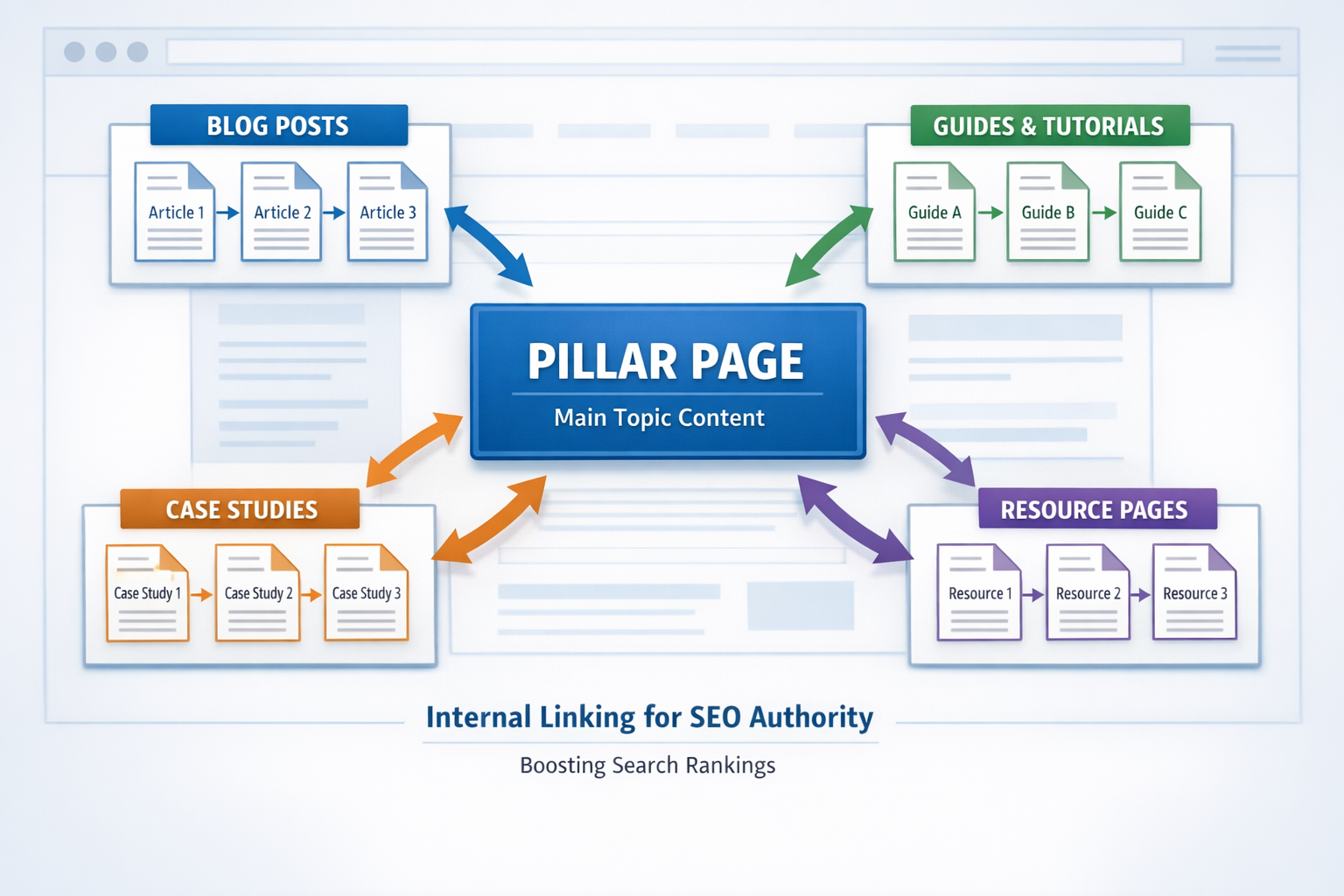
A strong internal link structure includes:
- Pillar pages (main topics)
- Supporting content (related articles)
Each supporting page should link back to its main topic, creating a clear structure.
You can review structured campaign execution examples through our marketing work portfolio to understand how structured content improves performance.
Identify High-Value Pages to Prioritize
Focus your internal linking strategy seo on pages that matter most:
- High-traffic pages
- Service or product pages
- Conversion-focused content
- Cornerstone articles
Directing more internal links to these pages signals importance to search engines.
Use Strategic Anchor Text Effectively
Anchor text internal links play a key role in SEO.
Instead of generic phrases, use descriptive text that reflects the destination page.
Best practices include:
- Keep anchor text natural
- Avoid keyword stuffing
- Use variations for a balanced profile
For example, using phrases like “how to improve internal linking” provides context to search engines.
Link Contextually Within Content
The most effective links are placed naturally within your content.
Contextual interlinking:
- Enhances user understanding
- Improves engagement
- Strengthens topical relevance
Professional teams offering digital marketing services often integrate internal linking into broader SEO strategies.
Audit and Update Internal Links Regularly
Your internal linking strategy seo should evolve as your site grows.
Regular audits help you:
- Fix broken links
- Update outdated content
- Add links to new pages
- Improve underperforming content
Consistent updates ensure your site maintains strong authority.
Real-World Applications of Internal Linking Strategy SEO
SaaS Content Clustering
A SaaS company organizes content into clusters and links supporting pages to pillar content. This improves rankings and increases organic traffic.
eCommerce Conversion Optimization
An online store uses internal links SEO to guide users from blog content to product pages, increasing conversions.
Agency Content Strategy
Agencies connect educational content with service pages, creating a seamless journey from learning to action.
You can explore related strategies in this guide on social media growth strategy.
These examples show how internal linking best practices directly impact traffic and revenue.
Best Practices for Effective Internal Linking Strategy SEO
To maximize results, follow these proven techniques:
- Prioritize user experience first
- Avoid excessive linking on a single page
- Maintain a clear content hierarchy
- Use analytics to refine your strategy
- Keep links relevant and updated
Using an internal linking template can also help standardize your approach across your website.
Consistency is key to building long-term SEO authority.
Final Thoughts on Internal Linking Strategy SEO
A well-planned internal linking strategy seo is one of the most effective ways to improve your website’s performance.
By structuring your content strategically, you:
- Help search engines understand your site
- Improve rankings across multiple pages
- Guide users toward meaningful actions
Start by auditing your current links, building a clear structure, and continuously refining your approach.
Frequently Asked Questions About Internal Linking Strategy SEO
What is an internal linking strategy?
It is the process of connecting pages within your website to improve navigation, authority distribution, and SEO performance.
How many internal links should a page have?
Most pages benefit from 3 to 10 relevant links, depending on content length and context.
Does internal linking improve SEO rankings?
Yes. It improves crawlability, distributes link equity, and strengthens keyword relevance.
What is the best anchor text for internal links?
Descriptive and natural anchor text that reflects the linked content works best.
How often should internal links be updated?
Review and update your links every few months to maintain accuracy and performance.
Contact Us
