Digital Marketing Ecosystem: Build a System That Drives Sustainable Growth
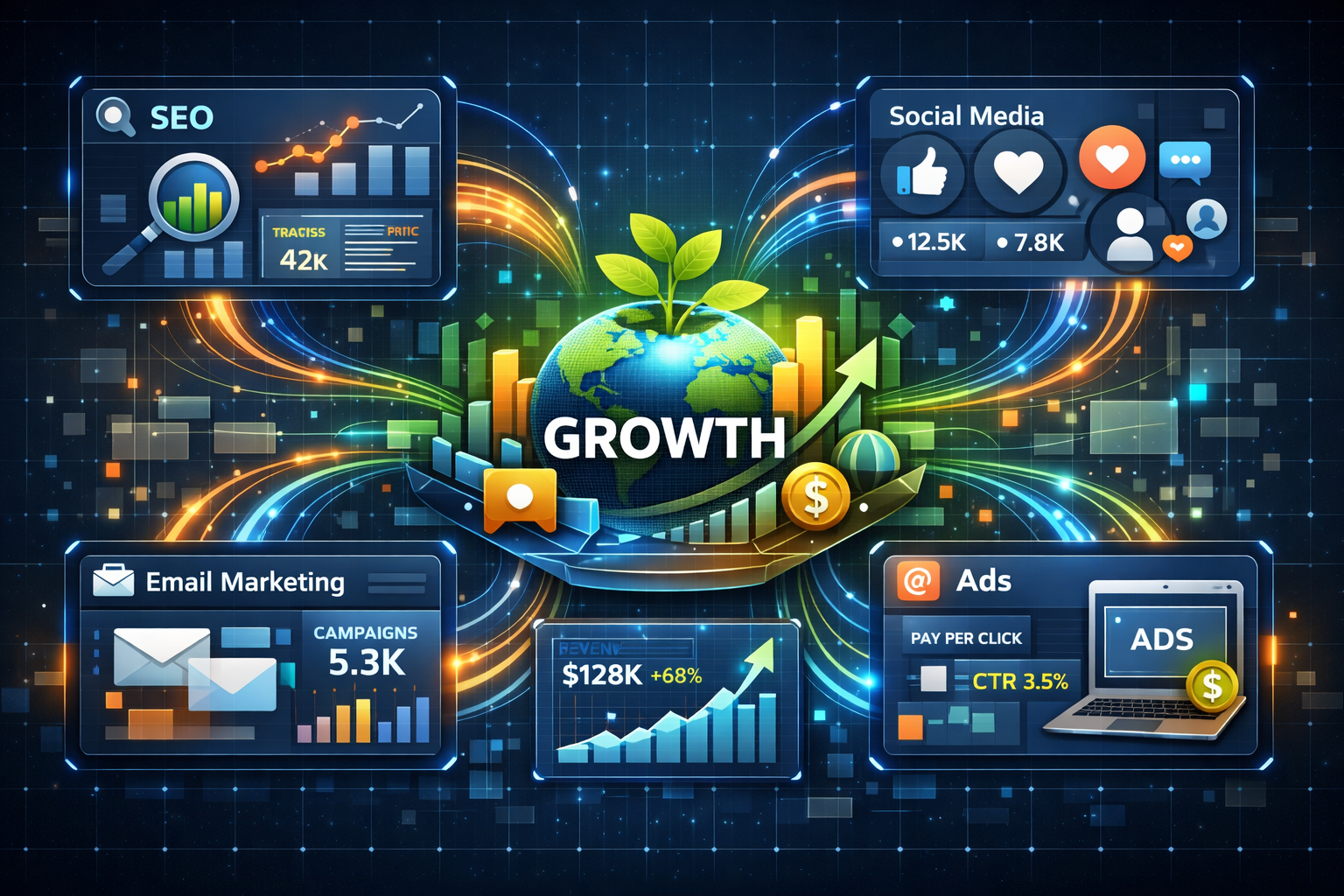


Many businesses struggle with marketing that feels disconnected. SEO operates separately, social media lacks direction, and paid ads run without a unified goal.
The result is wasted budget, inconsistent messaging, and slow growth.
A digital marketing ecosystem solves this by connecting every marketing channel into one cohesive system. Instead of isolated efforts, each channel supports the others to drive measurable results.
In today’s competitive landscape, this approach is not optional. It is essential for sustainable growth.
In this guide, you will learn how to:
- Align all marketing channels into one strategy
- Improve efficiency and ROI across campaigns
- Build a seamless and scalable customer journey
What Is a Digital Marketing Ecosystem
A digital marketing ecosystem is a connected network of channels, tools, and strategies that work together to attract, engage, and convert customers.
Rather than treating each channel independently, an ecosystem integrates them into a unified system.
This includes:
- SEO
- Paid advertising
- Social media marketing ecosystem
- Email marketing
- Content marketing ecosystem
- Analytics and tracking
Each part plays a role. For example:
- Content drives SEO
- Social media amplifies reach
- Ads accelerate traffic
- Data improves performance
This interconnected structure creates a powerful marketing ecosystem that delivers consistent results.
Why Businesses Need a Digital Marketing Ecosystem
Modern customer journeys are complex. People interact with brands across multiple platforms before making decisions.
Without a connected system, businesses lose opportunities at every stage.
A strong brand digital ecosystem provides:
- Consistent messaging across channels
- Better customer experience
- Improved tracking and insights
- Higher return on investment
Instead of focusing on more channels, successful brands focus on integration.
Core Components of a Digital Marketing Ecosystem
SEO and Organic Growth
Search engine optimization builds long-term visibility.
It attracts users actively searching for solutions and supports sustainable traffic growth.
SEO is a foundational part of any digital ecosystem strategy.
Paid Advertising and Acquisition
A digital advertising ecosystem includes PPC campaigns, display ads, and retargeting.
These channels:
- Drive immediate traffic
- Support product launches
- Amplify high-performing content
Paid media accelerates results while organic strategies build long-term value.
Social Media Marketing Ecosystem
Social media connects your brand with your audience directly.
It plays a key role in:
- Brand awareness
- Community building
- Content distribution
A strong social media marketing ecosystem ensures consistent engagement and visibility.
Content Marketing Ecosystem
Content is the backbone of your ecosystem.
A content marketing ecosystem includes:
- Blogs
- Videos
- Email content
- Social posts
Content connects all channels and ensures consistent messaging.
Email and Retention Systems
Email marketing nurtures leads and drives repeat engagement.
It helps:
- Convert prospects into customers
- Retain existing clients
- Increase lifetime value
This is a critical part of ecosystem marketing focused on long-term relationships.
Step by Step Guide to Building a Digital Marketing Ecosystem
Step 1: Define Business Goals and Objectives
Start with clarity.
Identify what you want to achieve:
- Brand awareness
- Lead generation
- Customer retention
- Revenue growth
Clear goals guide your entire digital ecosystem strategy.
Step 2: Choose the Right Channels
Not every channel is necessary.
Focus on the platforms that align with your audience and goals.
This creates a focused and efficient market ecosystem rather than scattered efforts.
Step 3: Build Integrated Content
Content connects everything.
Create content that can be reused across channels:
- Blog posts
- Social media content
- Email campaigns
- Ads
Learn how to allocate resources effectively in this guide on digital marketing budget allocation.
Step 4: Implement Data Tracking Systems
Data turns your ecosystem into a growth engine.
Track:
- Traffic sources
- Engagement metrics
- Conversion rates
- ROI
Centralized tracking ensures better decision-making.
Step 5: Optimize and Scale
Once your system is running, refine it.
- Double down on high-performing channels
- Automate repetitive tasks
- Expand successful campaigns
This is how you scale a building business marketing sales ecosystem for new client approach effectively.
Real World Examples of Digital Marketing Ecosystems
Multi Channel Brand Growth
A company integrates SEO, social media, and ads.
Content drives traffic, ads amplify reach, and analytics guide optimization.
Result: consistent and scalable growth.
Service Based Business
A service provider uses content to attract leads, email to nurture them, and ads to convert.
This creates a seamless customer journey.
eCommerce Brand
An online store connects product content, social promotions, and email campaigns.
This improves retention and increases revenue.
How Professional Services Strengthen Your Ecosystem
Building a high-performing ecosystem often requires expert support.
Businesses can explore:
- Strategy development
- Content creation
- Paid media management
- Analytics implementation
See how brands execute successful strategies through our work and client results.
For full-service support, explore digital marketing services.
Best Practices for a High Performing Marketing Ecosystem
Maintain Consistency
Ensure messaging, branding, and tone are aligned across all channels.
Focus on Customer Journey
Understand how users move through your ecosystem and optimize each stage.
Use Data to Improve
Continuously refine your strategy based on performance insights.
Integrate Tools and Platforms
Avoid data silos by using connected systems.
Think Long Term
Sustainable growth comes from consistency and strategy, not quick wins.
Common Mistakes to Avoid
Treating Channels Separately
Disconnected channels reduce effectiveness.
Ignoring Data
Without analytics, optimization is impossible.
Overexpanding Too Quickly
Focus on mastering core channels before scaling.
Inconsistent Messaging
Mixed messaging weakens brand identity.
Conclusion: Build a System That Scales
A digital marketing ecosystem is not just a collection of channels. It is a system designed to drive long-term growth.
Key takeaways:
- Align all marketing efforts into one strategy
- Use content as the foundation
- Track performance with data
- Optimize and scale continuously
When your ecosystem is connected, every action contributes to growth.
Start building your ecosystem today, and turn your marketing into a scalable, high-performing system.
Frequently Asked Questions
What is a digital marketing ecosystem?
A digital marketing ecosystem is a connected system of channels and tools that work together to attract, engage, and convert customers.
Why is a digital marketing ecosystem important?
It improves efficiency, ensures consistent messaging, and increases ROI by aligning all marketing efforts.
What channels are included in a digital marketing ecosystem?
Common channels include SEO, paid advertising, social media, email marketing, and content marketing.
How do you build a digital marketing ecosystem?
By defining goals, selecting key channels, creating integrated content, tracking performance, and optimizing continuously.
Can small businesses benefit from a digital marketing ecosystem?
Yes, even small businesses can achieve better results by aligning their marketing into a cohesive system.
Contact Us
